TEAM / FUND RESEARCH WORKSPACE
Connect market-moving events to portfolio risk, company assumptions, and scenario valuation
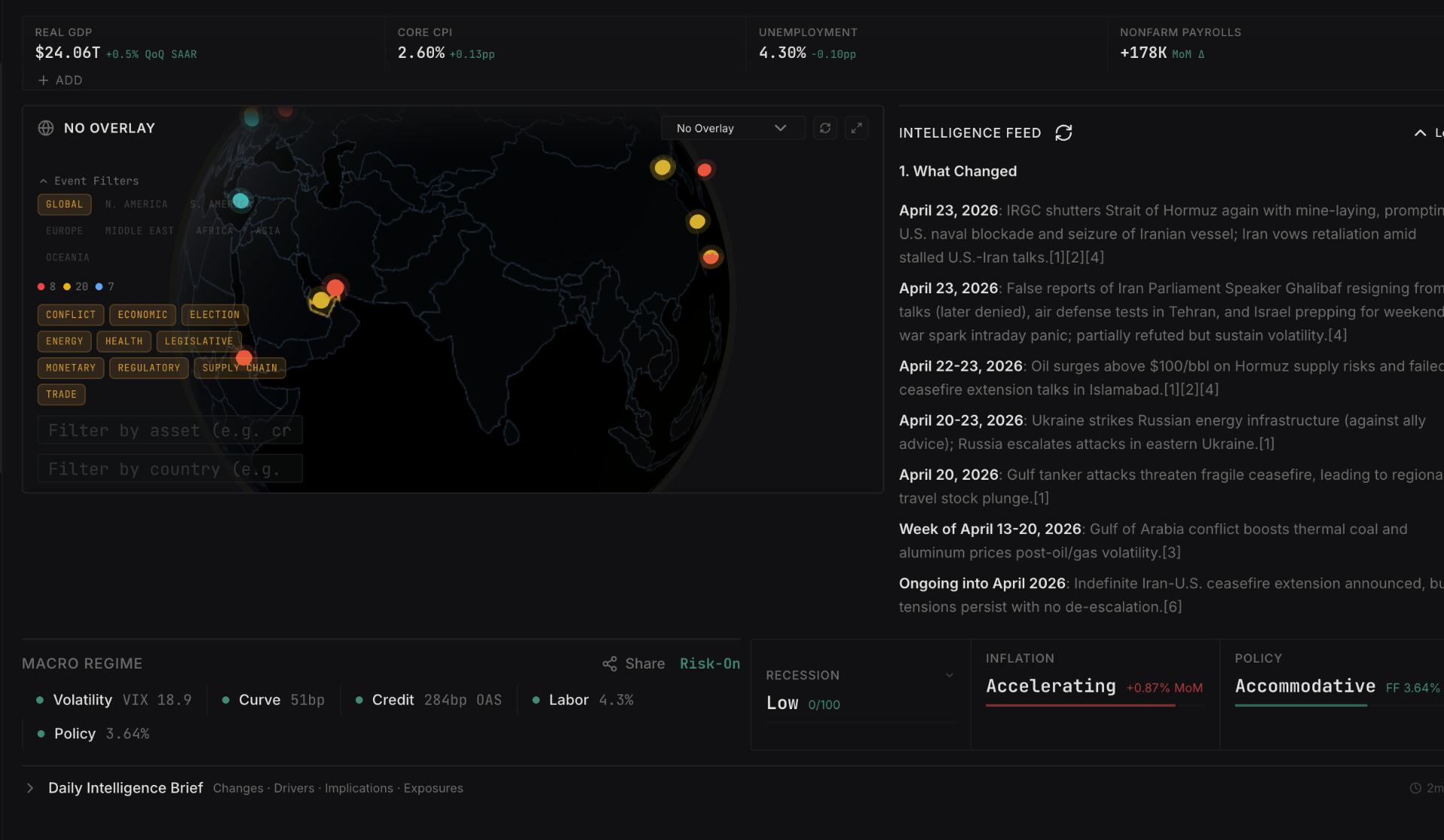
Market Ontology connects policy, central-bank moves, liquidity, rates, FX, commodities, and equities to portfolio holdings, financial statements, valuation assumptions, and scenarios.
See which holdings are exposed, which line items may need revision, how valuation changes, and what evidence would confirm or invalidate the view.
$399/mo · billed today · up to 10 seats · portfolio, valuation, scenarios, econometrics, API
The workflow problem
The hard part is translating market information into research work
A central-bank move, oil shock, tariff, sanctions event, labor print, liquidity shift, or regulatory change does not matter because it is interesting.
It matters if it changes portfolio exposure, company revenue, COGS, operating expenses, working capital, cost of debt, discount rate, terminal growth, factor sensitivity, or scenario probability.
That work is usually done across terminals, filings, spreadsheets, market calendars, broker notes, valuation models, and internal memos.
Market Ontology puts the first pass in one workspace.
The Desk workflow
From external event to portfolio and valuation update
Identify the change
Macro data, policy decision, central-bank move, geopolitical event, commodity shock, liquidity-regime shift, legislation, filing, or company-specific development.
Map affected exposures
Portfolio holdings, sectors, countries, factors, rates, credit, FX, commodities, options, revenue drivers, cost inputs, and financing assumptions.
Translate into assumptions
Revenue, COGS, OPEX, gross margin, free cash flow, cost of debt, WACC, terminal growth, liquidity risk, valuation multiple, and scenario probability.
Produce the research output
Portfolio risk update, valuation adjustment, scenario memo, investment committee note, PM question list, hedge review, or empirical appendix.
Portfolio Management
Portfolio risk tied to the events and macro variables moving markets now
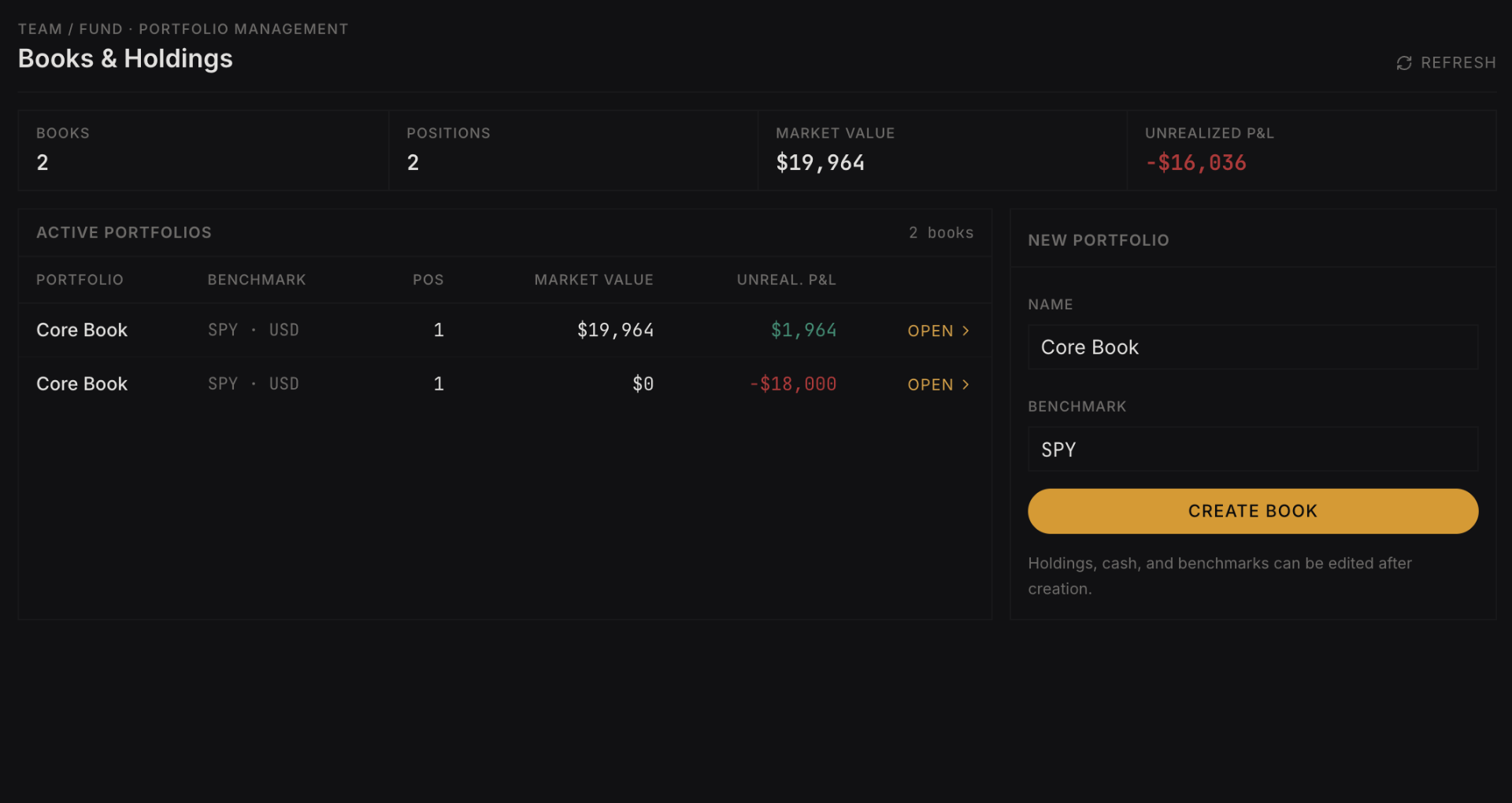
Upload equity holdings and review portfolio risk, factor exposure, concentration, drawdown, VaR, CVaR, tracking error, stress scenarios, and live developments affecting the largest positions.
What it calculates
Market Ontology layer
The standard risk layer is connected to current macro, policy, geopolitical, liquidity, commodity, and company-specific developments. The question is not only how the portfolio behaved historically. The question is which holdings are exposed to the current event or regime.
Output examples
- · Largest-holding exposure review
- · Factor exposure explanation
- · Stress-scenario output
- · Holdings requiring valuation review
- · Hedge candidate list
- · Risk committee note
- · Client or PM update
Equity Valuation
Valuation with assumptions tied to current market conditions
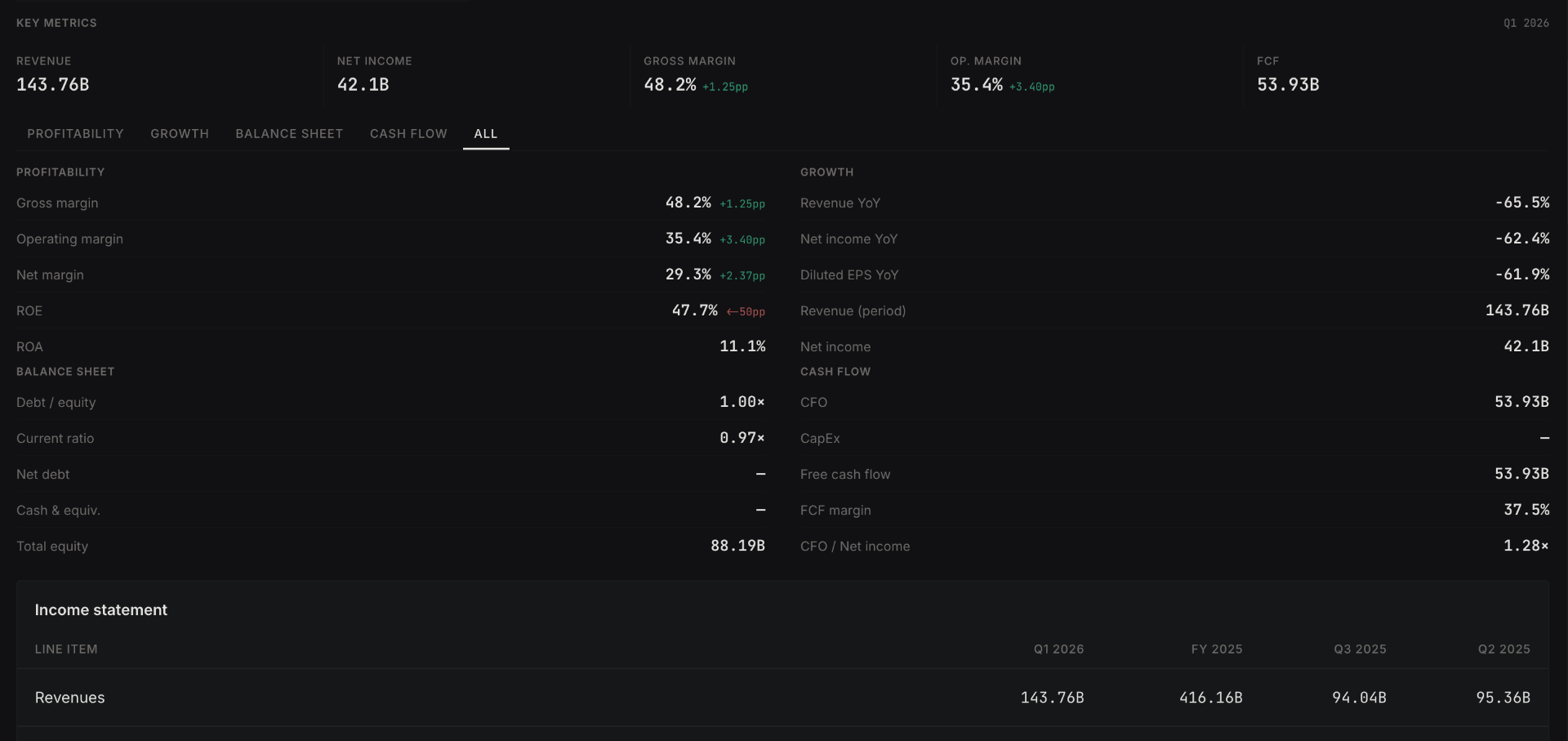
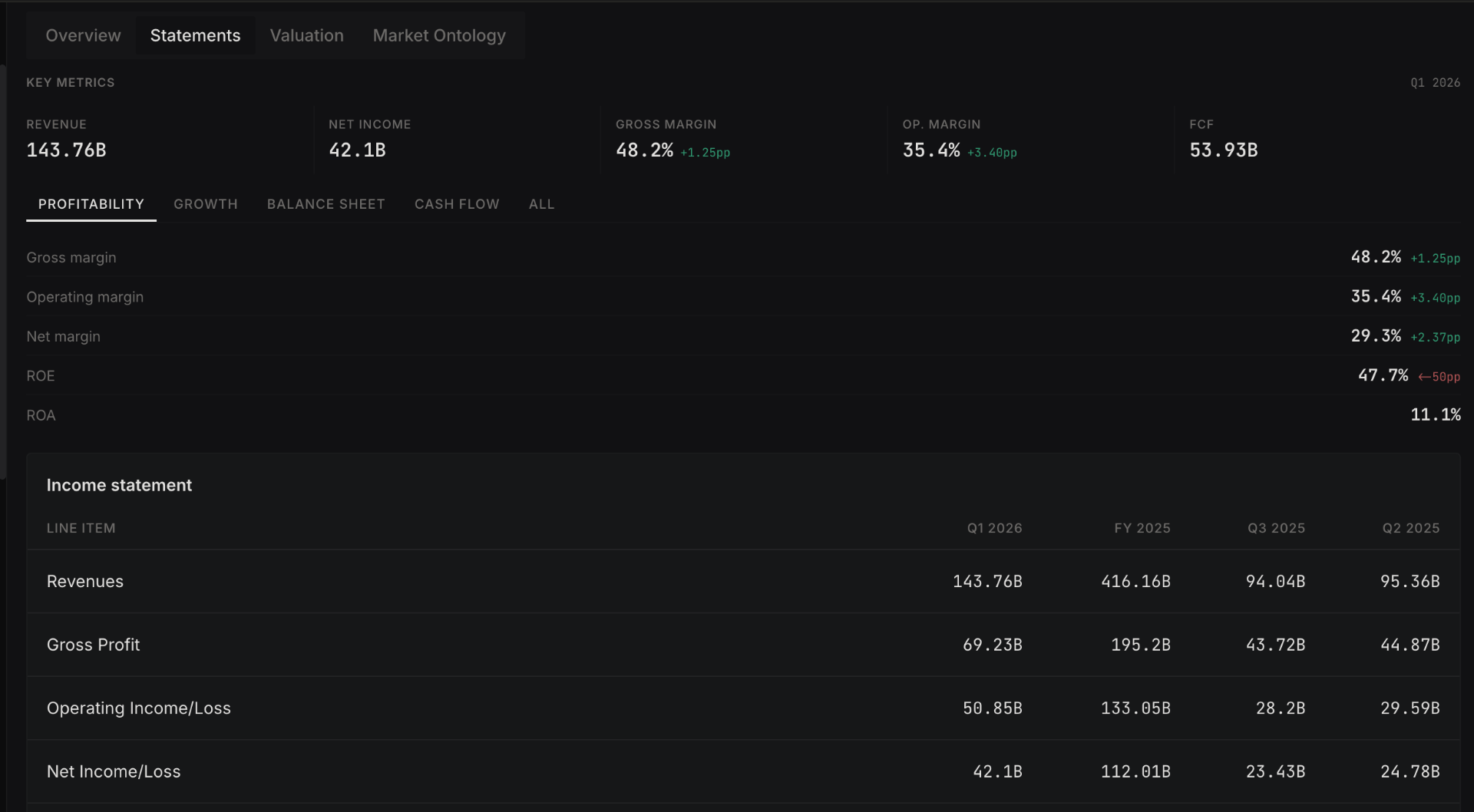
Search a company, review the stock overview, financial statements, market data, share count, filings, ownership, and valuation outputs. Then evaluate how current macro, policy, geopolitical, commodity, supply-chain, and financing conditions affect the assumptions inside the model.
- 01
Company overview
Ticker, exchange, market cap, price, diluted shares, sector, filings, ownership, trading context.
- 02
Financial statements
Income statement, balance sheet, and cash flow statement with detailed historical line items.
- 03
Consensus valuation
Base valuation built from historical statements and consensus assumptions, including terminal value, long-term growth, discount rate, CAPM inputs, enterprise value, price per share, and upside/downside.
- 04
Market Ontology adjusted valuation
Current events and macro conditions are evaluated against revenue, cost structure, long-term growth, cost of debt, risk-free rate, beta, and discount rate.
- 05
Assumption trail
Each changed assumption is shown with the supporting reason, affected line item, confidence level, and invalidation condition.
The valuation number is not enough. The assumption trail is what the analyst needs to inspect.
Econometric Workbench
Run the empirical test before treating a relationship as usable
The Econometric Workbench lets the team select outcomes, shocks, controls, samples, specifications, and inference methods, then review the coefficient table, impulse response, diagnostics, validity report, and market implications.
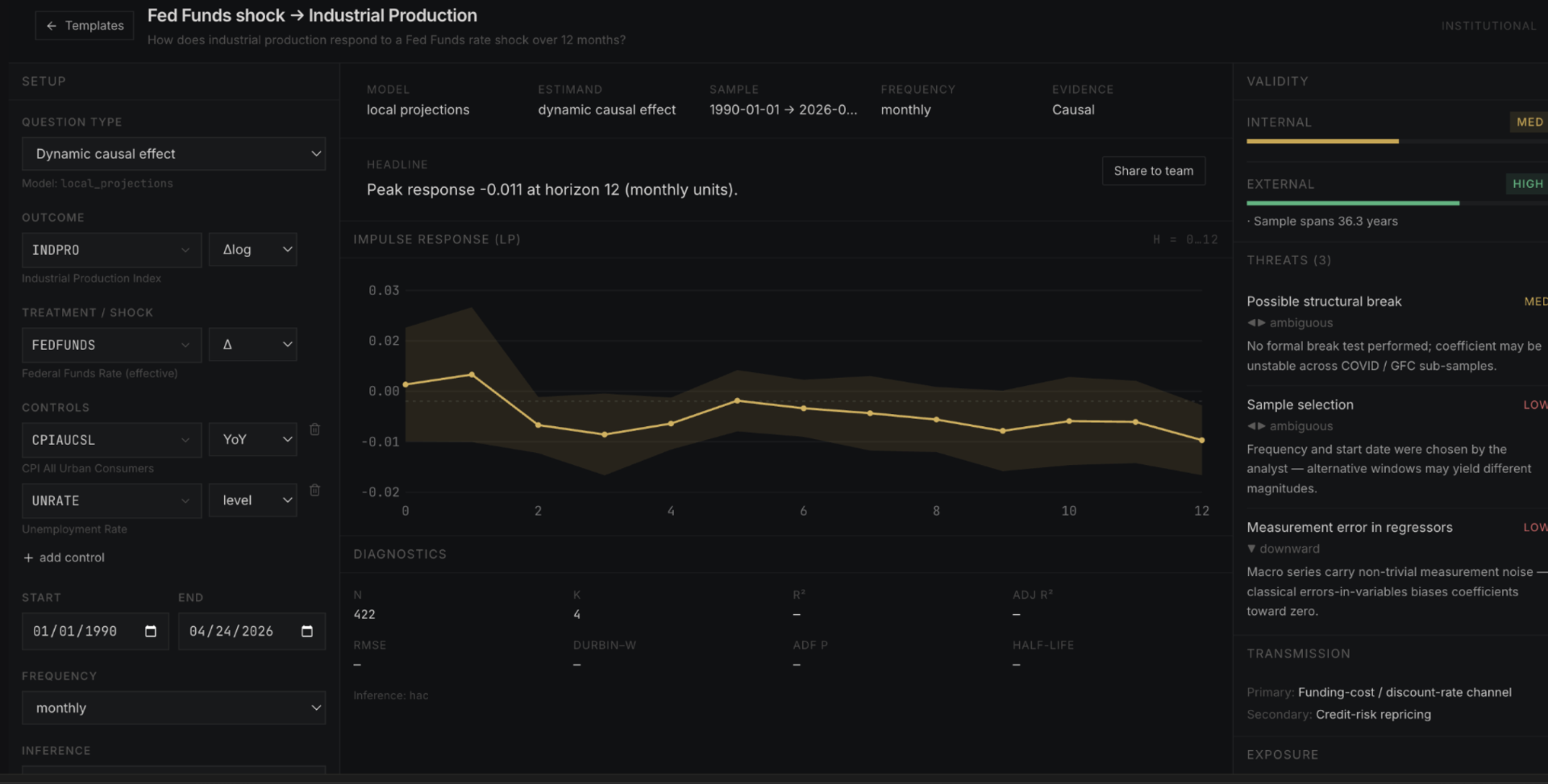
Configurable
- · Outcome
- · Treatment or shock
- · Controls
- · Sample
- · Frequency
- · Model family
- · Inference method
- · Event window
- · Fixed effects
- · Transformations
- · Robustness checks
Model families
- · Local projections
- · Event studies
- · Panel fixed effects
- · Difference in differences
- · Synthetic control
- · Instrumental variables
- · Factor models
- · Cointegration / error correction
- · Hazard models
- · DCC-GARCH / covariance models
- · Double / debiased ML
- · Causal forests
Output
- · Coefficient table
- · Impulse response
- · Standard errors
- · p-values
- · R² / diagnostics
- · Validity threats
- · Bias direction
- · Asset implications
- · Portfolio implications
- · Valuation implications
- · Exportable research appendix
Scenario Valuation
Test how a macro, policy, or geopolitical scenario changes valuation
Enter a scenario and Market Ontology translates it into changed valuation assumptions: revenue, COGS, operating expenses, margins, cost of debt, WACC, terminal growth, and price per share.
Scenario examples
Energy cost, freight, consumer demand, inflation path, margin pressure, rates, and discount rate.
Supplier costs, gross margin, pricing power, product demand, supplier substitution, and geographic revenue exposure.
WACC, valuation multiple, debt servicing cost, refinancing risk, consumer demand, and capital spending.
Revenue eligibility, compliance cost, approval timing, pricing power, market size, and risk premium.
Cost of debt, equity risk premium, beta, refinancing risk, valuation multiple, and funding-sensitive demand.
Output
- Changed valuation
- Changed price per share
- Affected line items
- Assumption table
- Supporting reasoning
- Probability estimate
- Confidence level
- Data points to monitor
- What would invalidate the scenario
Causal implications
Each module states what the data is likely to affect
Market Ontology adds causal implication cards across modules such as labor markets, liquidity, monetary policy, events, and equity valuation.
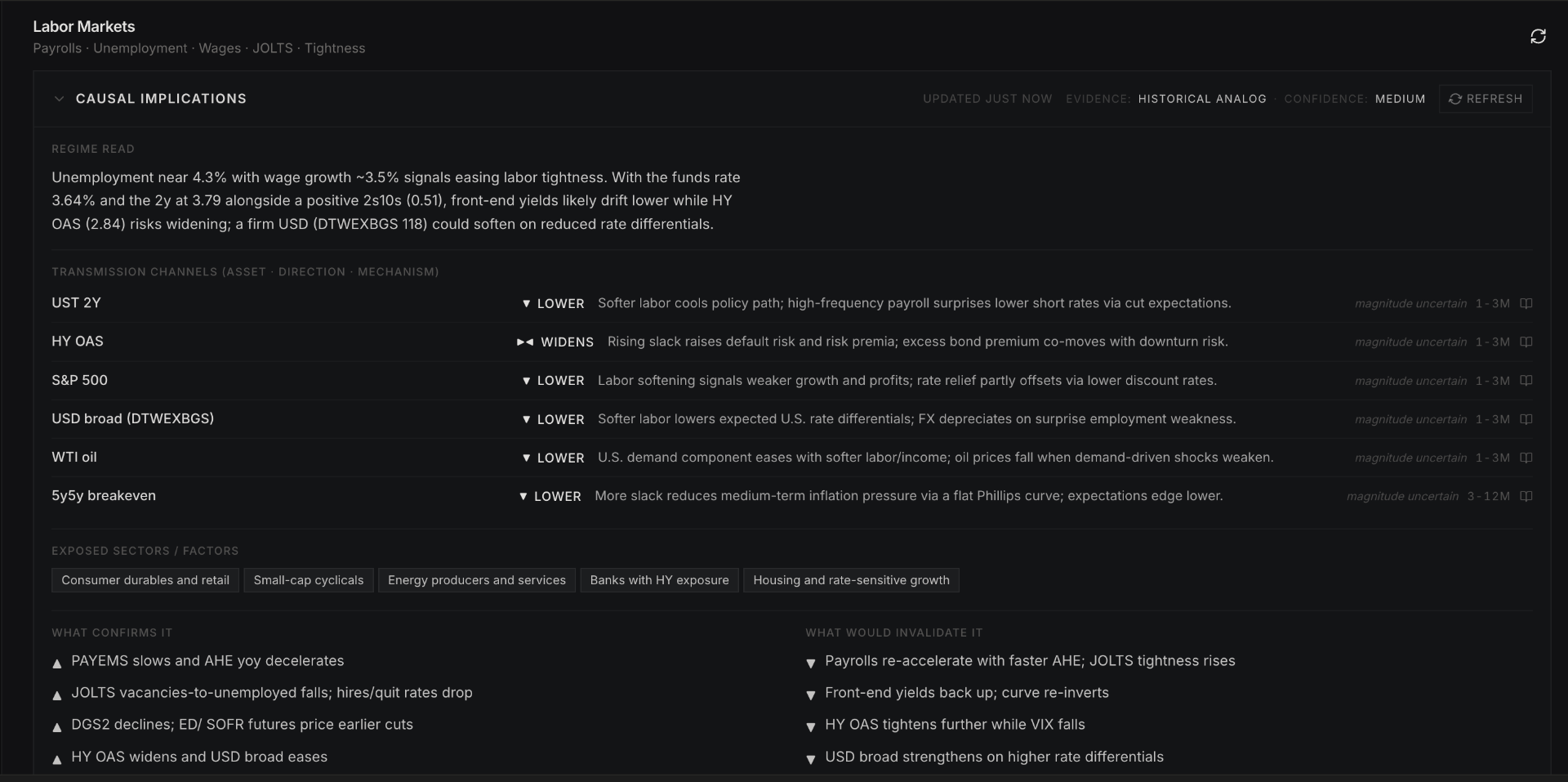
Workspace Chat
Ask questions against the workspace context
Workspace Chat answers against the portfolio, company pages, valuation runs, scenarios, events, causal cards, and econometric studies saved in the Workspace.
- Which holdings are most exposed to higher real yields?
- Which companies in the portfolio have valuation assumptions most sensitive to oil?
- What changed in the AAPL valuation between consensus and Market Ontology adjusted run?
- Which scenario has the largest effect on price per share?
- Which econometric results are strong enough to cite in an investment committee note?
- What would invalidate the current liquidity-regime interpretation?
Who this is for
Built for teams that need to turn external data into research output
Good fit
- Hedge funds
- Family offices
- Equity research teams
- Long/short equity teams
- Portfolio managers
- Investment committees
- Credit and private credit teams
- Macro and rates teams
- Research operations teams
Not a good fit
- · Users looking for stock tips
- · Users who only need a daily news summary
- · Users who do not need portfolio, valuation, scenario, empirical, or team workflow features
Pricing
Start the Desk
Portfolio management, equity valuation, scenario valuation, causal implications, econometric workbench, workspace chat, shared workspace, and API access. No sales call required. Invite the team after signup.
- Up to 10 seats
- Portfolio Management
- Equity Valuation
- Scenario Valuation
- Econometric Workbench
- Causal implications
- Workspace Chat
- API access
- Shared research workspace