Precedent transaction analysis
Value a company from multiples paid in comparable acquisitions, with deal dates, control premiums and sources for each precedent.
What would an acquirer likely pay for this company?
Precedent analysis applies EV/EBITDA and EV/Revenue multiples paid in similar past acquisitions to the target. Because they include control premiums, results usually sit above trading comparables.
What you see in Market Ontology
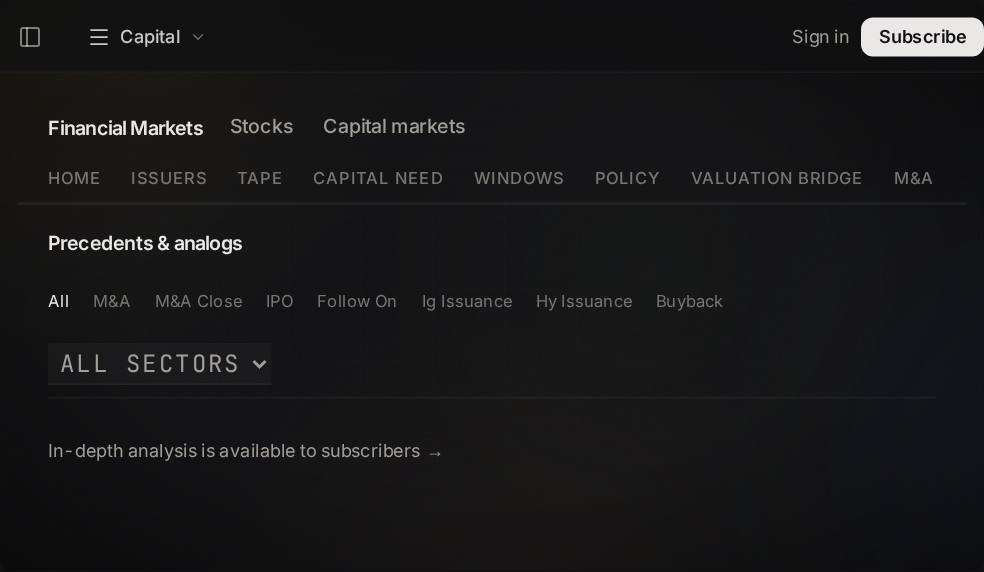
The live product, read-only. Your own work opens here after checkout.
Start the job
What opens after checkout
Sourced precedent set with inclusion and adjustment rationale, built from the details above and saved to your account in Capital Command.
- You get
- Sourced precedent set with inclusion and adjustment rationale
- Opens in
- Capital Command
- Built from
- Industry, geography, period, size, traits
- Orders
- None; nothing is sent on your behalf