Size a hedge for a portfolio or position
Calculate how much of an index ETF or future offsets a portfolio's market exposure using beta-adjusted notional, and what it costs.
How large should a hedge be to offset my market exposure?
A beta hedge sizes the short so its dollar sensitivity matches the portfolio's. Hedge notional = portfolio value × portfolio beta × hedge ratio ÷ hedge instrument beta. Dividing by the instrument price gives shares or contracts.
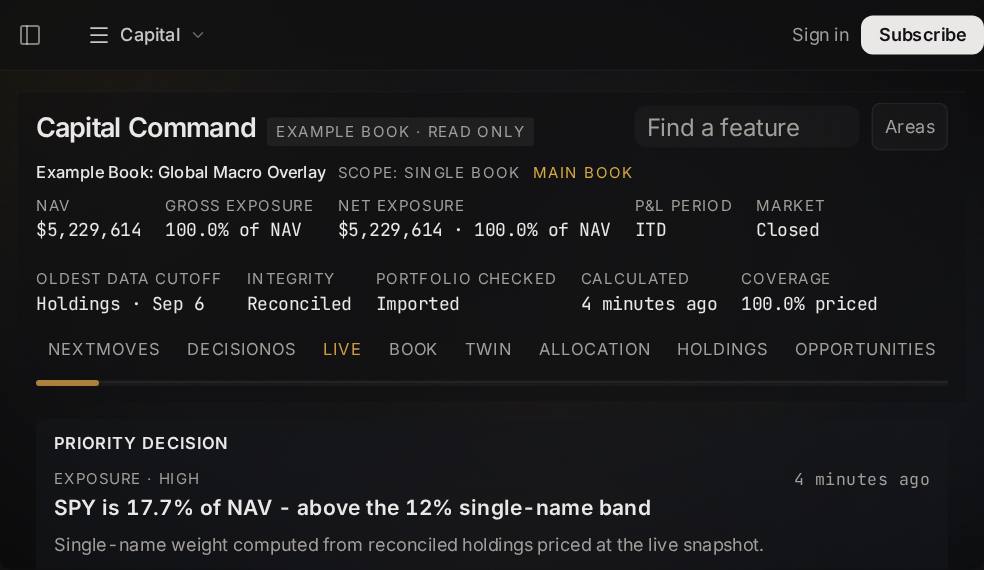
What you see in Market Ontology
The live product, read-only. Your own work opens here after checkout.
Start the job
What opens after checkout
Inverse-ETF hedge sizing with assumptions and reviewed order continuation, built from the details above and saved to your account in Capital Command.
- You get
- Inverse-ETF hedge sizing with assumptions and reviewed order continuation
- Opens in
- Capital Command
- Built from
- Holdings, exposure reduction, horizon
- Orders
- None; nothing is sent on your behalf