FOR EQUITY RESEARCHERS & SECTOR ANALYSTS
Find what changes the names you cover
Market Ontology connects macro, policy, geopolitics, rates, commodities, supply-chain shocks, and options context to the assets and sectors they can actually affect.
Desk $399/mo · Workspace walkthrough for research desks
Most coverage work breaks when the driver is outside the model
Your model tracks revenue, costs, margins, leverage, capex, valuation, and guidance. But the thing that changes the name often starts somewhere else: a policy shift, a rates move, a commodity squeeze, a central-bank statement, a supply-chain chokepoint, a geopolitical event, or options positioning around the catalyst.
The slow part is not finding the headline. The slow part is deciding whether it changes the assumptions behind the stock.
External shock
Transmission
Coverage impact
From outside shock to coverage action
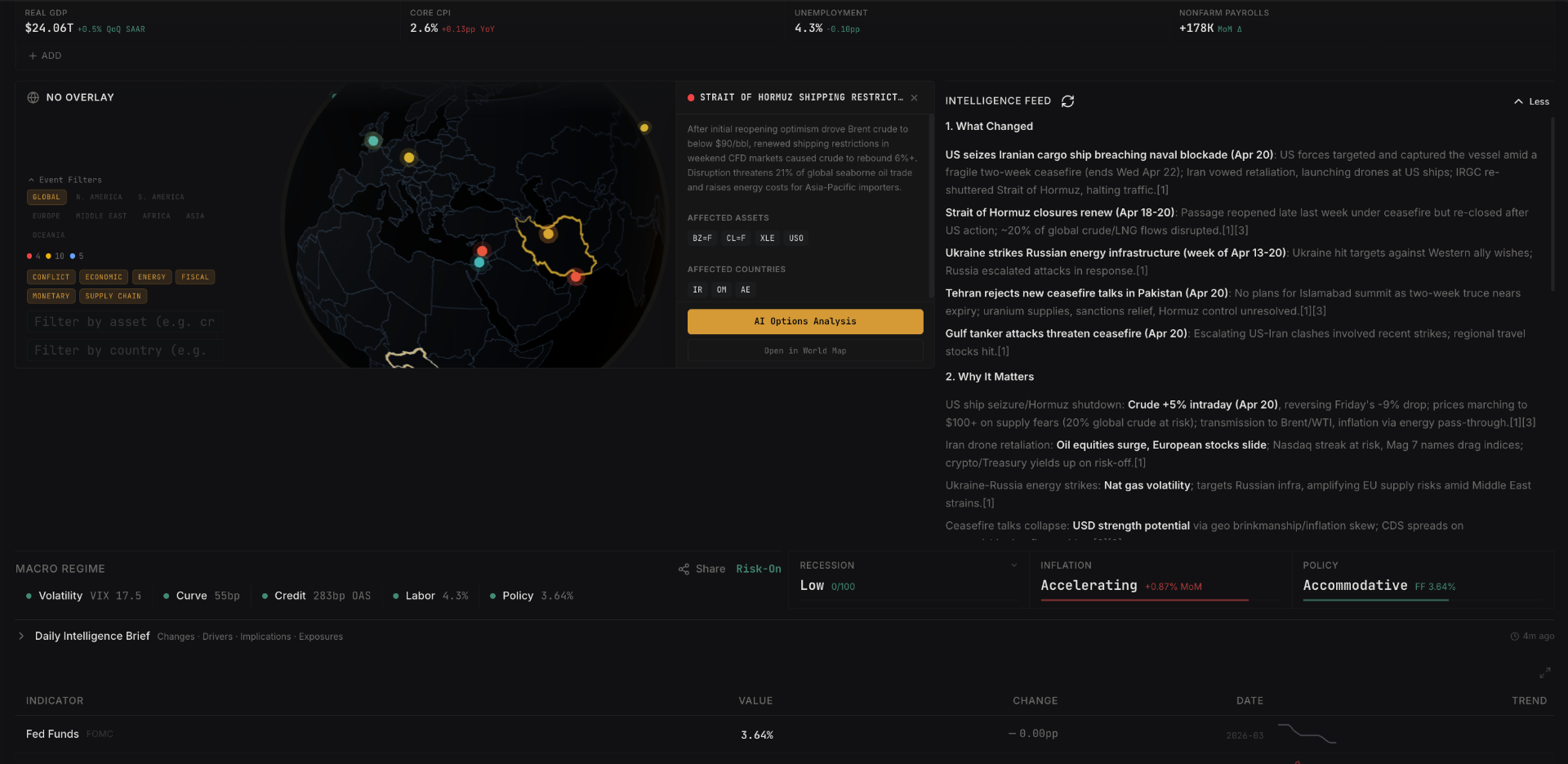
Start with what changed
Open the daily brief or event map to see which macro, policy, commodity, and geopolitical developments are active before you touch the model.
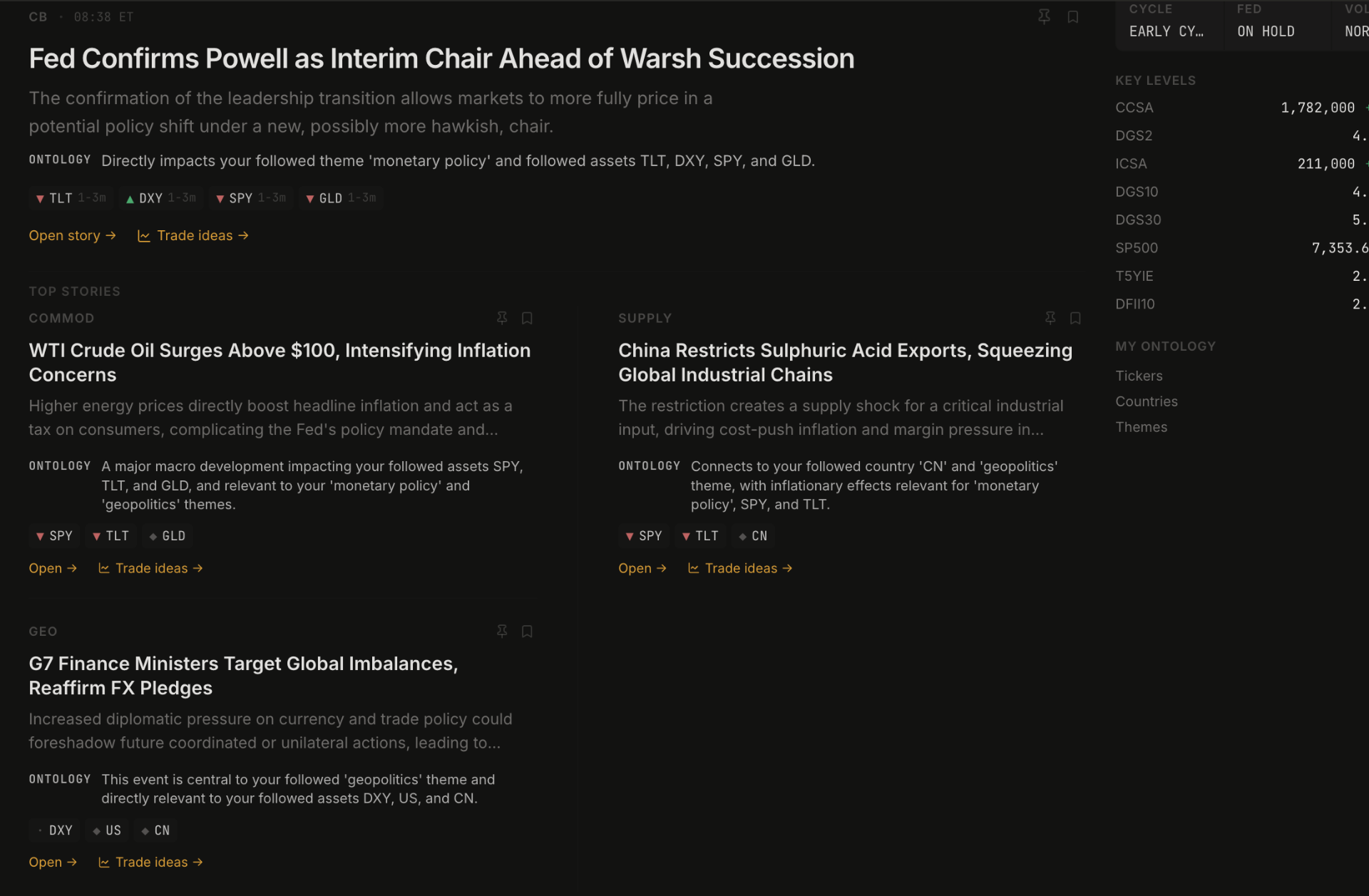
Daily intelligence brief / AM Edition
Identify what it touches
Use event-to-exposure mapping to see the sectors, tickers, countries, and macro nodes connected to the event so you can narrow coverage impact fast.
Map + affected assets + intelligence feed
Check the transmission path
Decide whether the event matters through revenue, input cost, financing cost, FX, valuation multiple, or regulatory risk before you revise any assumptions.
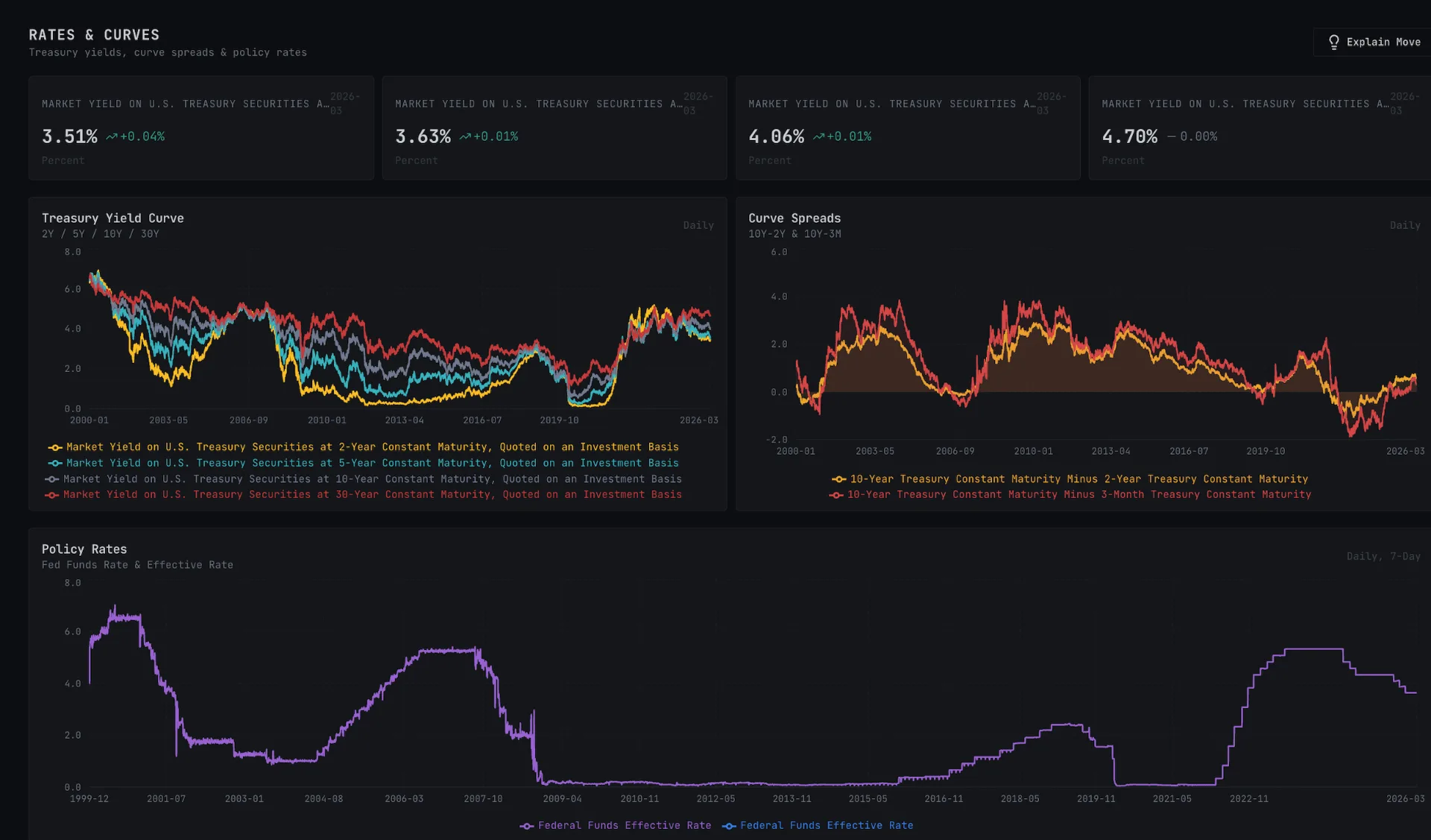
Rates / macro regime / transmission context
Update the coverage workflow
Turn the signal into a model note, PM question, watchlist item, earnings-call question, or thesis risk with explicit outputs tied to the driver.
What equity analysts use it for
Earnings prep
Before earnings, check whether macro, rates, commodities, policy, or supply-chain variables changed enough to affect guidance risk.
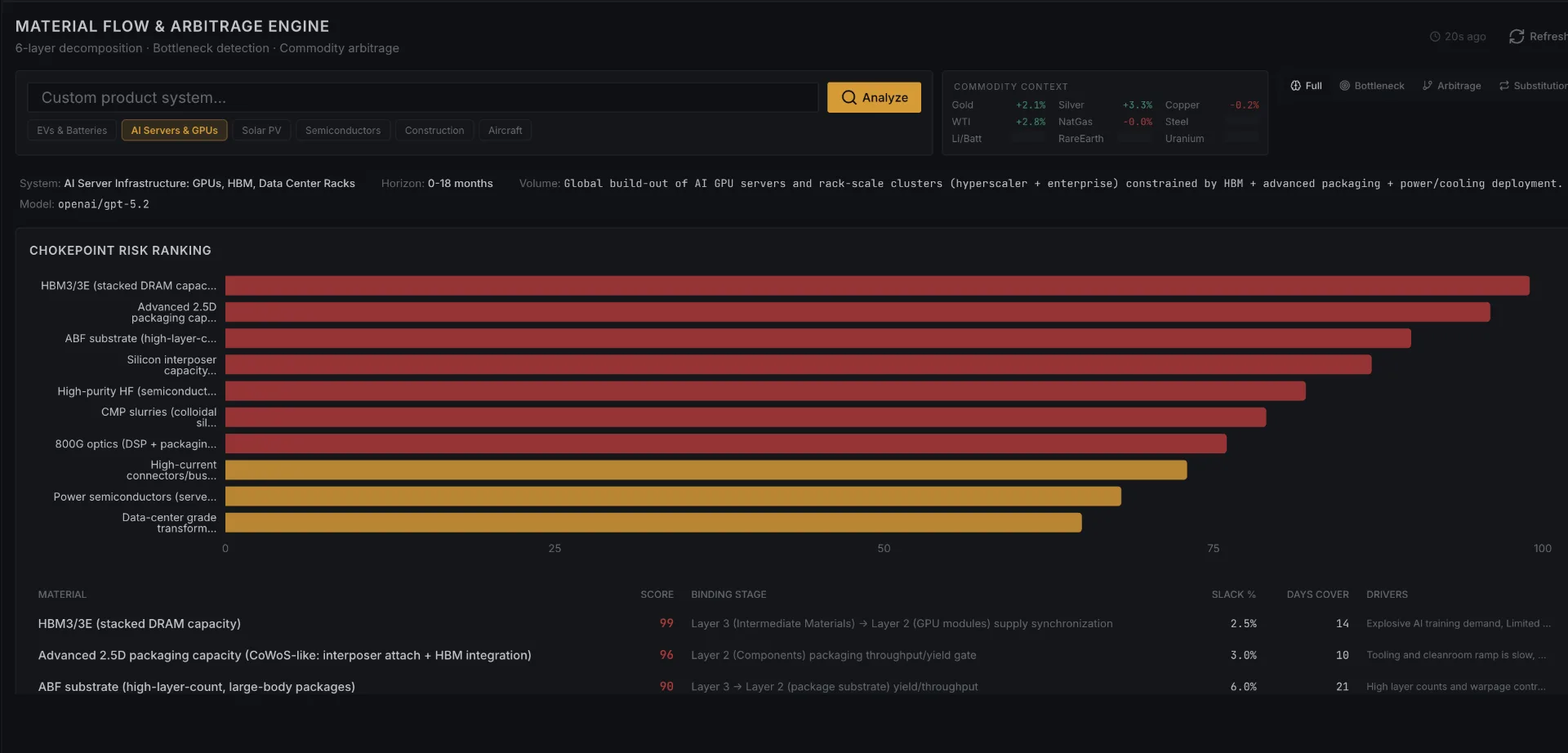
Margin risk
Track energy, freight, labor, input costs, and supply-chain chokepoints before they show up in company commentary.
Multiple pressure
Connect rate moves, credit conditions, and financial conditions to the valuation setup for rate-sensitive sectors.
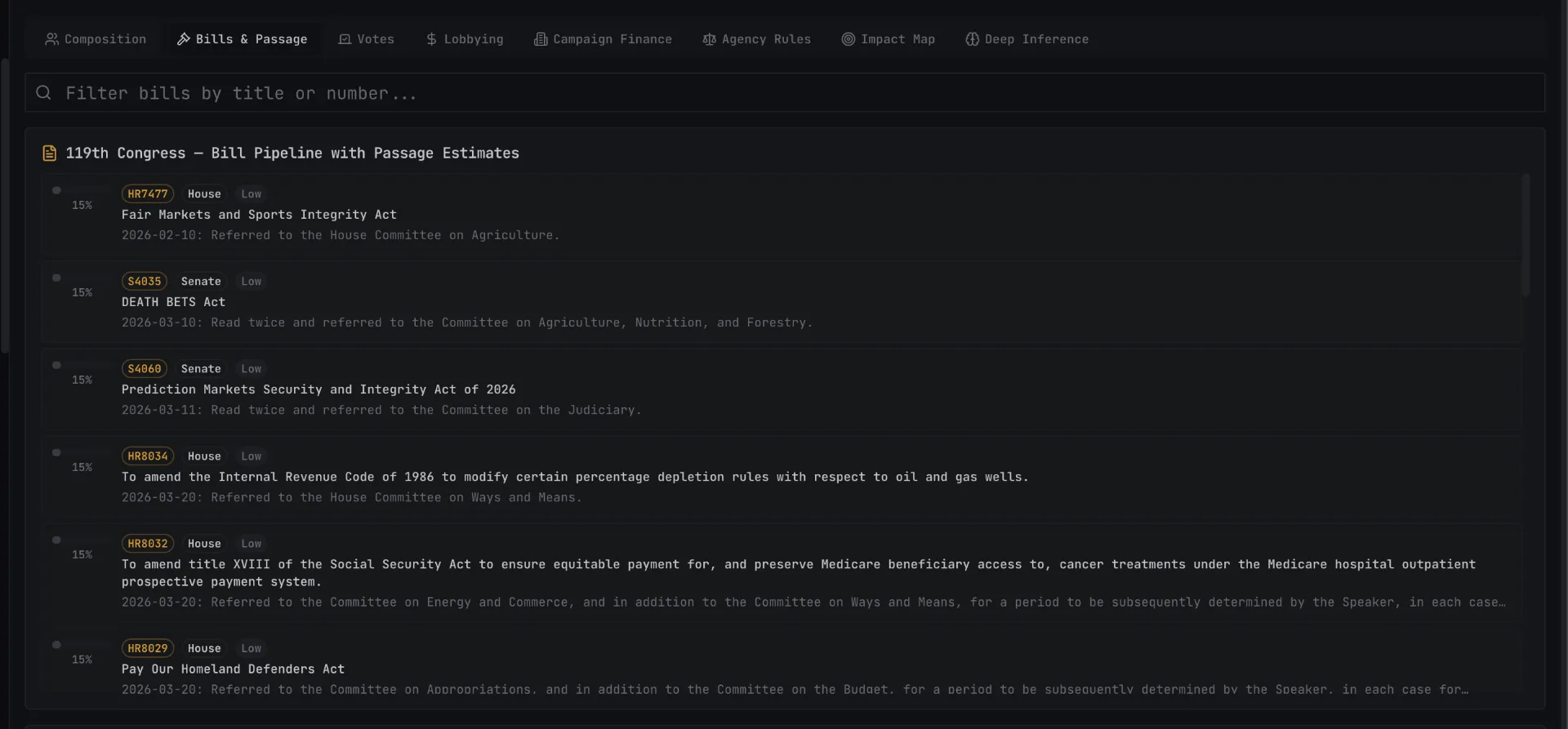
Policy and regulation
Follow bills, rulemaking, central-bank communication, lobbying, and policy transmission into affected sectors.
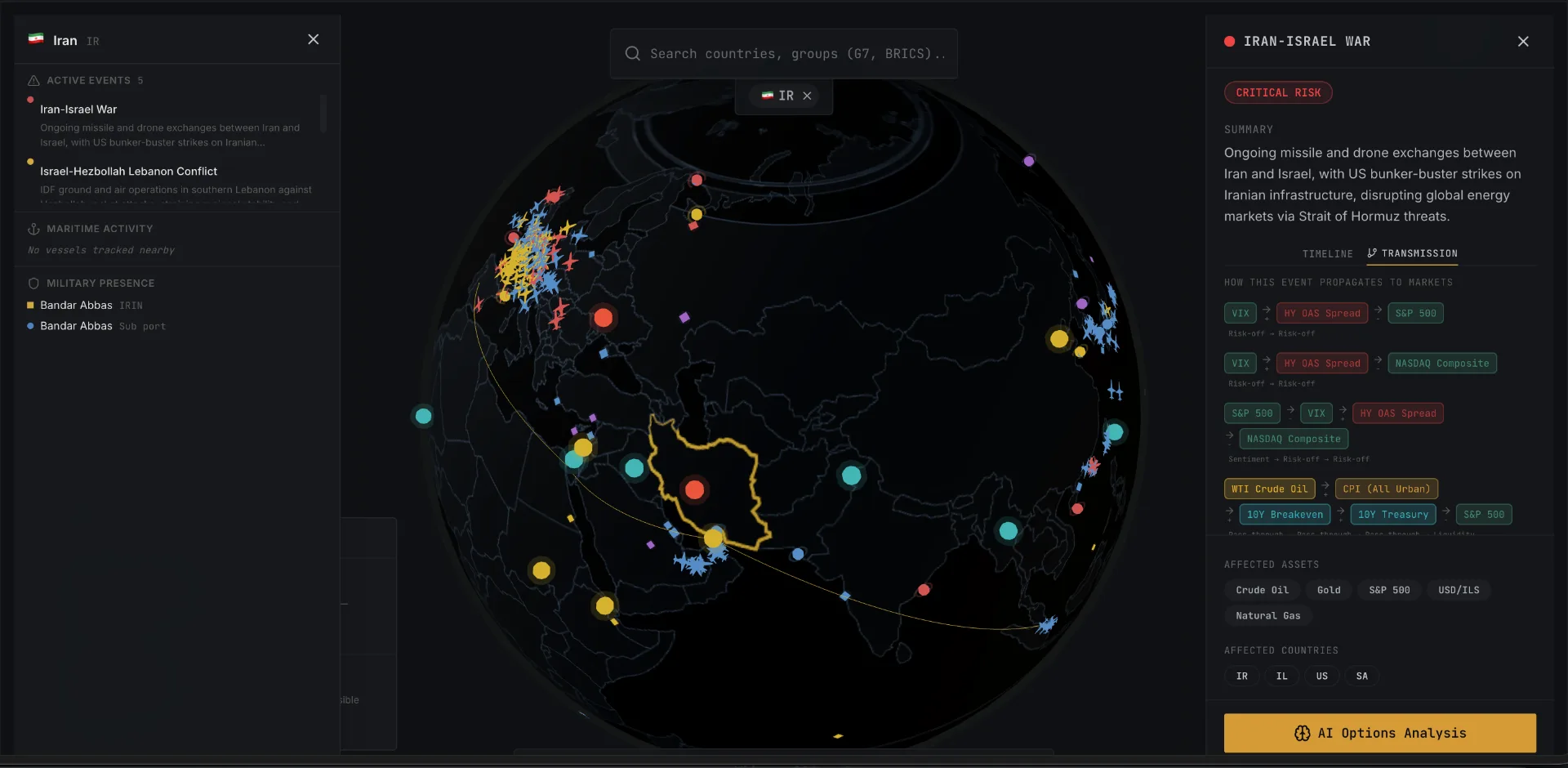
Event-driven coverage
When a shock hits, see which names and sectors are plausibly exposed before the consensus note is written.
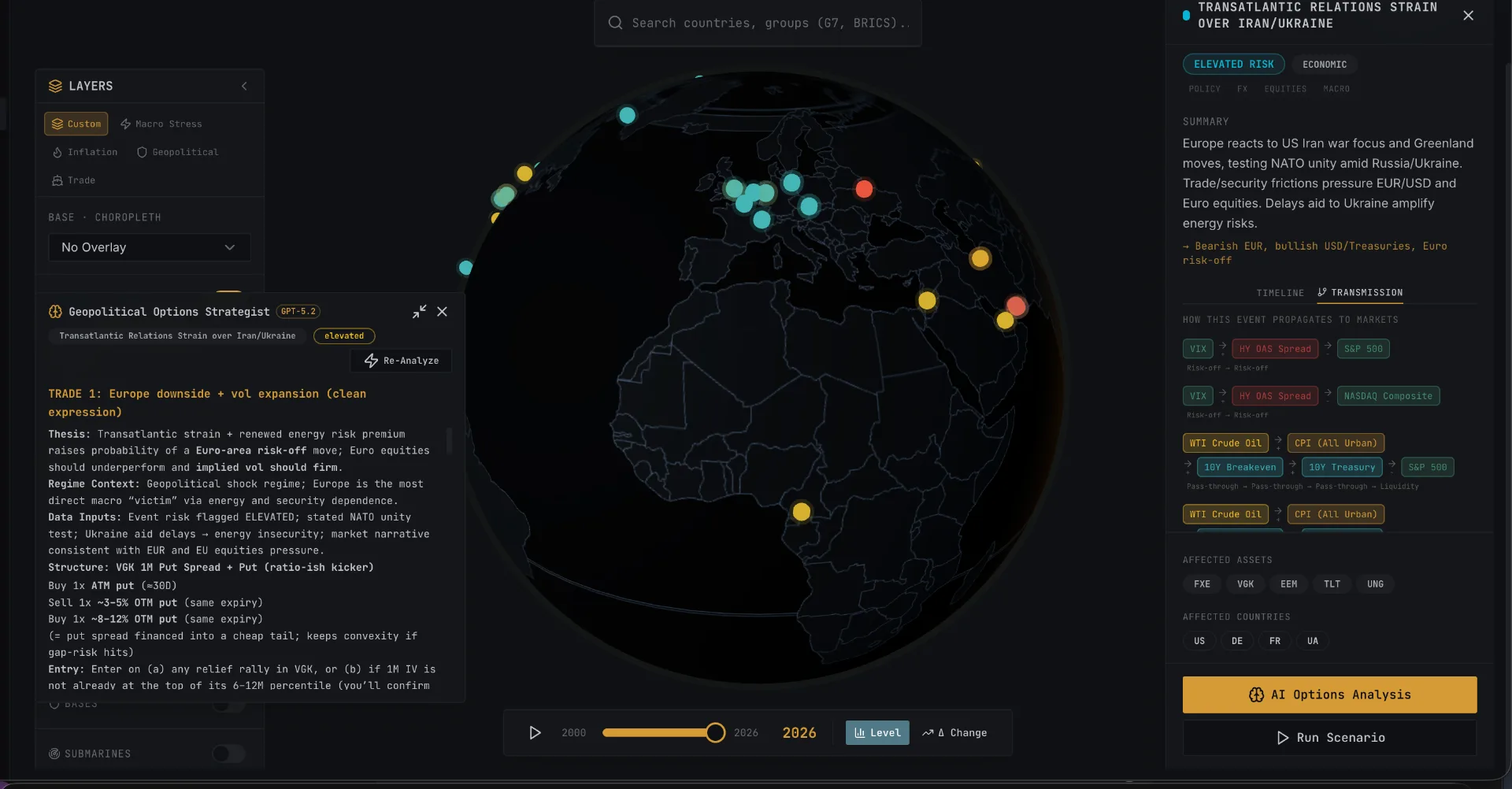
Options context
Check whether the options market is pricing stress, complacency, or asymmetry around the catalyst.